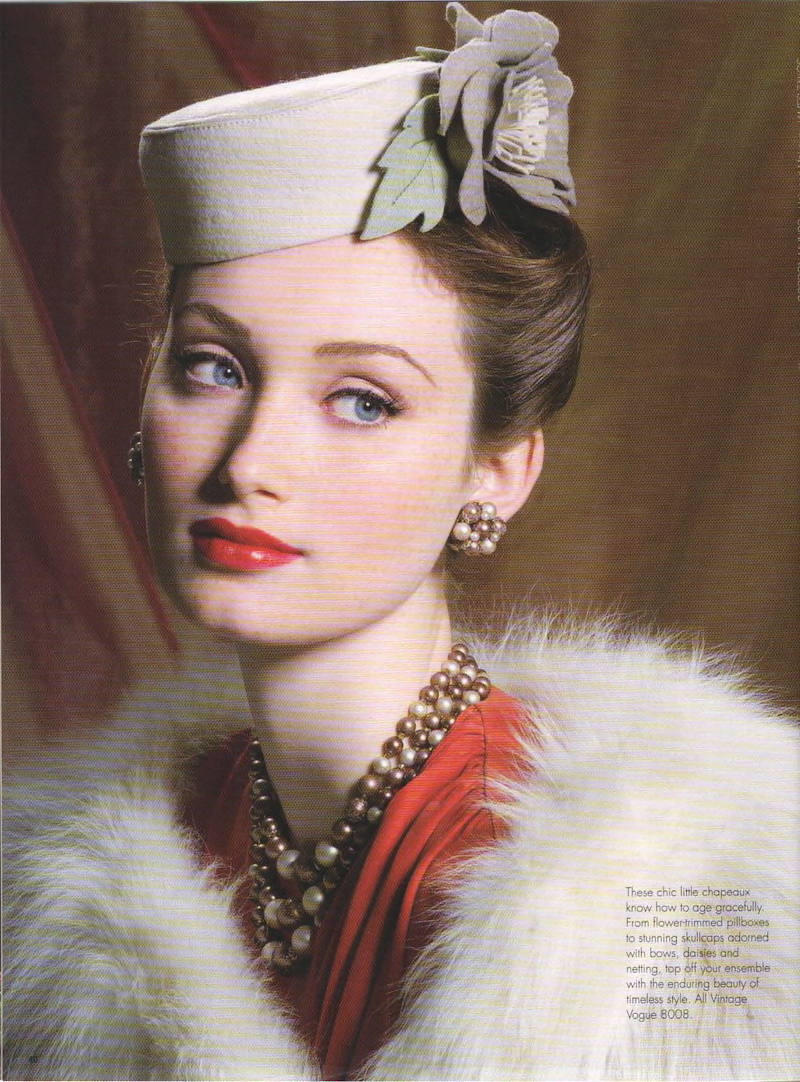

This Christmas, while browsing my mother’s back issues of Vogue Patterns magazine, I was interested to see how the Vintage Vogue pattern line has evolved since its launch in 1998. Two repro patterns that were made up more than once for the magazine’s editorials are especially revealing of Vogue Patterns’ choices in promoting its vintage line. A look at the magazine’s different versions of these patterns seems the perfect opportunity for end-of-year reflection on different approaches to sewing—and wearing—vintage.
Vogue 2241, an early 1930s evening gown pattern, has been made up twice for the magazine. (See the pattern on flickr here.) This pattern is one of the earliest Vintage Vogues: it was released soon after the initial batch, which was photographed in black and white for the September/October 1998 issue.
The 1998 holiday issue’s “Vintage Vogue: Past Perfect” feature shows two evening designs, one Fifties, one Thirties, with an old-fashioned dressing screen. The headline promotes the ‘romance’ and timelessness of vintage, and the accompanying copy relates both designs to the “spare, romantic elegance of modern eveningwear,” but the shoot’s dress-up concept makes the garments look static and costumey. Here’s the first Vintage Vogue 2241, in washed silk charmeuse:

Six years later, the same design was remade for another holiday editorial, this one called “Vintage Nights.” This shoot features lush ‘vintage’ set design, with the model conveying a glamorous hauteur. The emphasis is more on dramatic style and interpretation: the headline reads, “Relive the glamour of a bygone era. Dressing for evening takes a cue from the past in Vintage Vogue.” Here’s the second Vogue 2241, this time in sueded silk charmeuse:

The second Vintage Vogue pattern, Vogue 2787, a Forties reproduction, is still in print. For its initial release in spring 2004, Vogue 2787 was made up in two versions, a printed and a solid silk charmeuse, each paired with a retro hat and gloves. The pattern was released with another Forties design, and the editorial gives a fairly direct rendition of Forties glamour; as the headline says, “Forties and still fabulous—take it from us, classic couture gets better with age.” Here are the first two versions of Vogue 2787:


A few years later, Vogue 2787 reappeared in a garden party-themed editorial of Forties and Fifties designs called “Well Cultivated Vintage Vogue.” (The cover shows a Fifties top from the same shoot.) The headline promotes the designs’ freshness and timelessness: “Firmly rooted in the elegance of the past, these perennial beauties make a perfect pick for today.” Vogue 2787’s next incarnation was made up in silk crepe de chine in a pink-dotted print:

And just this fall, Vogue 2787 opened a feature called “Beyond Vintage,” in which Vogue Patterns’ staff adapted and modernized their reissued patterns. Creative Director Jelena Bogavac updated the Forties dress by raising the hemline and altering both sleeves for an asymmetrical bodice. Here it is in iridescent green and pink velvet:

Has our thinking about vintage changed since the ’90s? When the two reissued patterns first came out, their straight period styling was appealing enough for me to get them both. Today I prefer the interpretation of the “Vintage Nights” shoot, and the updating and play of the fall vintage feature.
If you sew vintage, do you make it straight up, or with a twist? Do you adapt your style to accommodate vintage pieces, or make vintage adapt to you?
***
In case you missed it, I’m We Sew Retro’s featured member for December—you can see my interview here.
All the best for 2012!


 PatternVault
Leave a reply to Amy Cancel reply