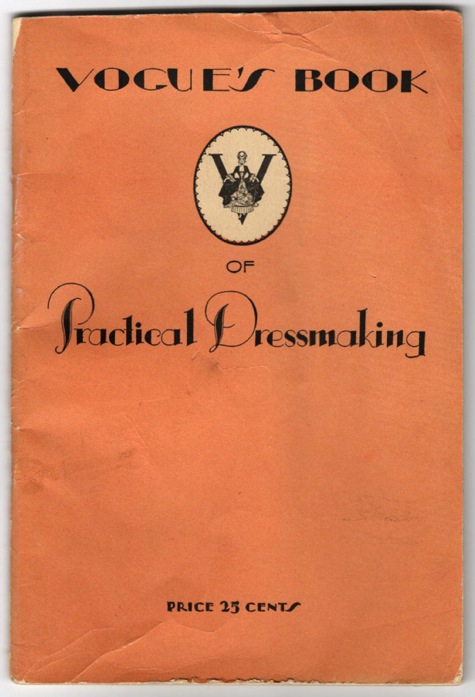
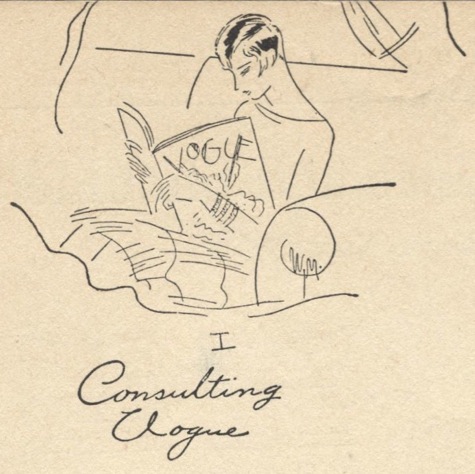
My 1926 copy of Vogue’s Book of Practical Dressmaking has endpapers charmingly illustrated by W. Mury. They’re a great example of aspirational marketing in that they situate the dressmaking process in a world of wealth and leisure. The illustrations show the elegant dressmaker beginning by consulting her copy of Vogue magazine before her trip into town:
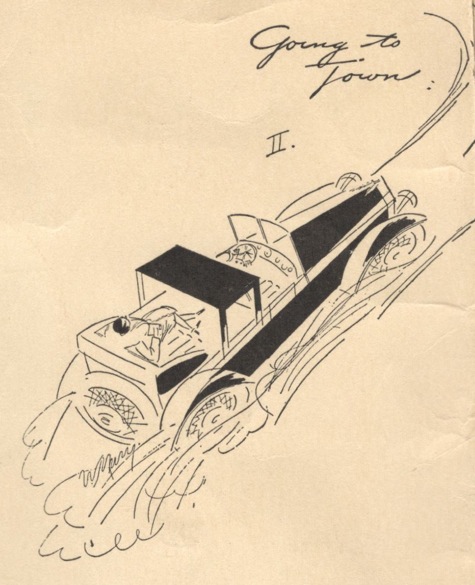
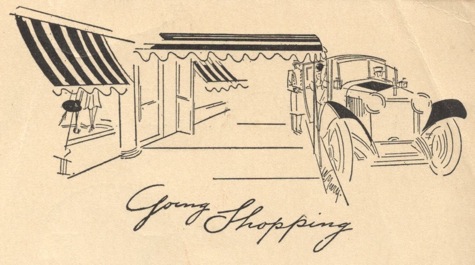
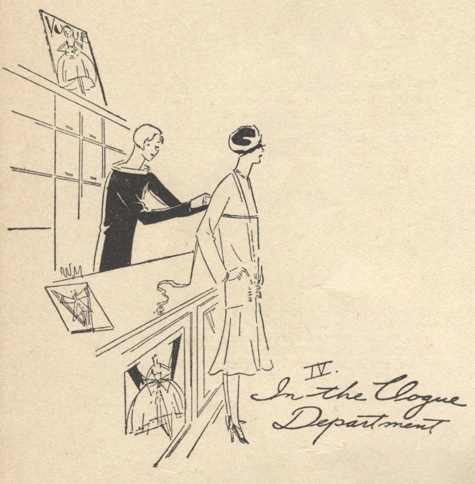
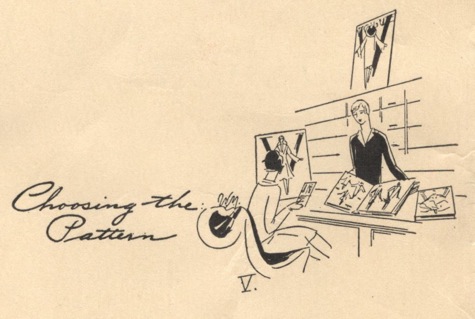
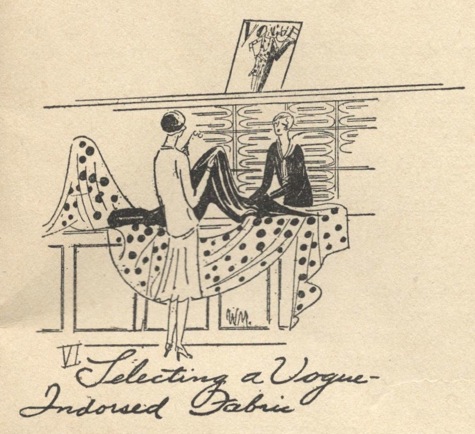
Madame’s driver waits outside with the car during her visit to a department store. In the Vogue department, sales attendants measure her and show her the latest patterns and Vogue-approved fabrics:
Back at home she cuts, sews, and finishes her new dress, which sets her “apart from the crowd”:
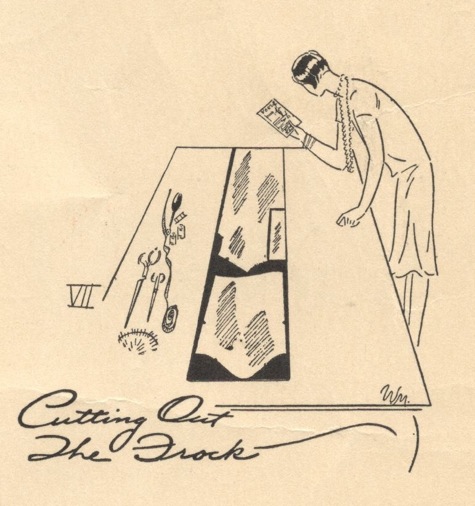
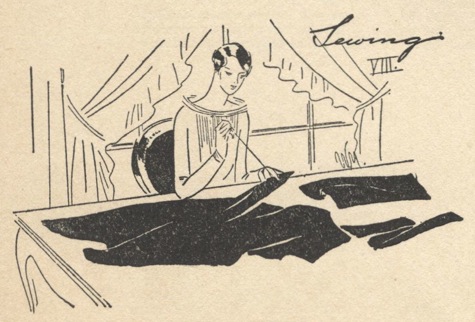
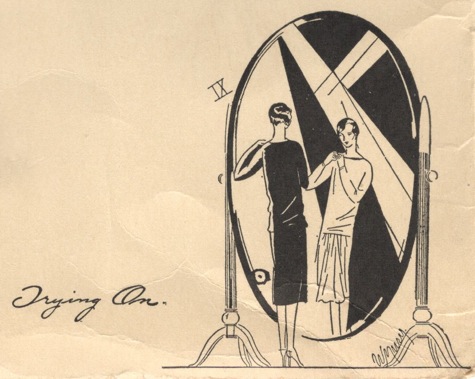
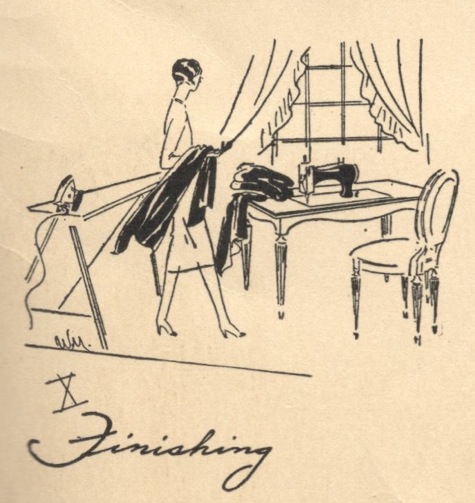
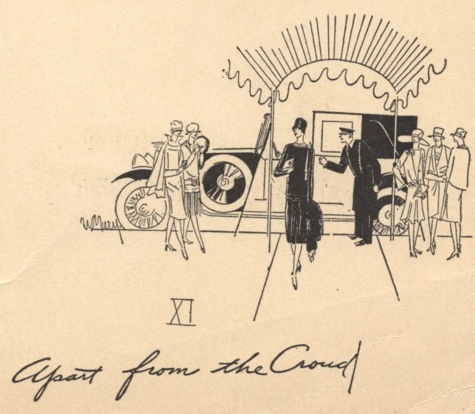
Mury’s illustrated sequence presents sewing as a leisure activity: guided by Vogue’s fashion authority, the chic young woman sews for pleasure. It’s interesting how, with the increasing availability of ready-made women’s wear, the sewing industry took to promoting itself by appealing to the desire for leisure and social status. Even if a car and driver weren’t in the budget, you could still sew from a Vogue pattern.


 PatternVault
Leave a comment