For Haute Couture Week, I’m sharing my original research into a forgotten couture house: the house of Mata Kiato.
A pair of couture sewing patterns seem to be the only remaining trace of Paris couturier Mata Kiato. Contemporary sources credit Mata Kiato as the designer of two interwar couture patterns from McCall’s, but it’s difficult to find any details on this maison. The first and last names appear to be Greek: Máta is a girl’s name, and Kiáto is a town near Corinth. Was Madame Kiato a Greek couturière who showed in Paris?
Internet searches for the name returned no results. An inquiry with the Palais Galliera yielded nothing on the name, although they had some helpful suggestions for further searches. But in one archival source from January, 1932, I found an advertisement (below) and a short review of Mata Kiato’s Spring 1932 presentation.

That season, Mata Kiato was a new couture house, showing its collection out of 4 rue de Castiglione. (Rue de Castiglione runs south from the Place Vendôme to the Tuileries; no. 4 was across from the Hôtel Intercontinental.) As the reviewer wrote, “The collection of the new house of Mata Kiato is so thoroughly sophisticated that one would never suspect it [of] being a first show.” Colour contrasts featured in most of the looks described, including a black and white design called Grand Prix.
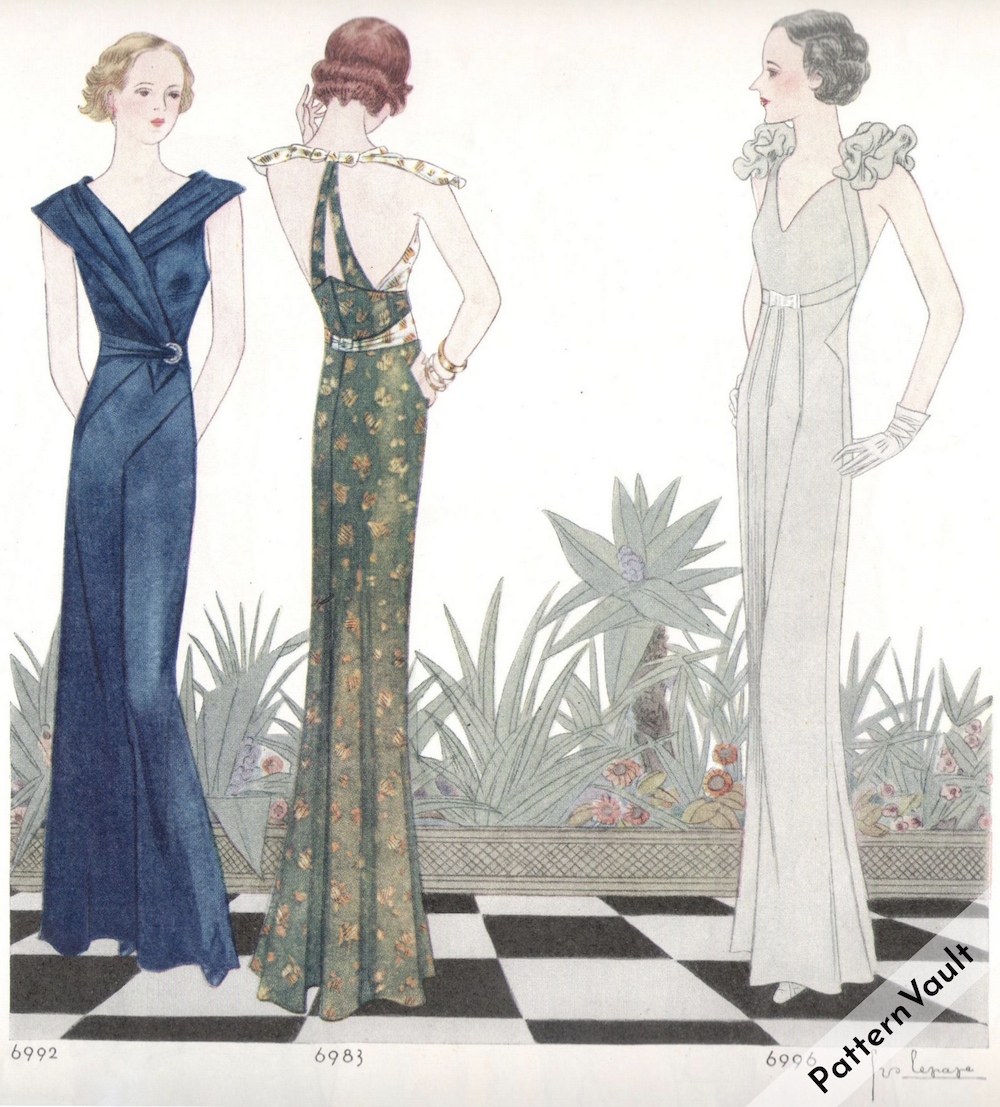
Mata Kiato is credited with two McCall designs from the summer and fall of 1932: an evening gown and a day dress, both using contrast fabrics. The gown is prominently featured in McCall Fashion Bi-Monthly, where it was illustrated by Georges Lepape flanked by two other fashion-forward evening dresses; captions identify a bias skirt for the gown on the right, but not the Kiato model. The same Lepape illustration could be seen in the July 1932 issue of McCall’s magazine.
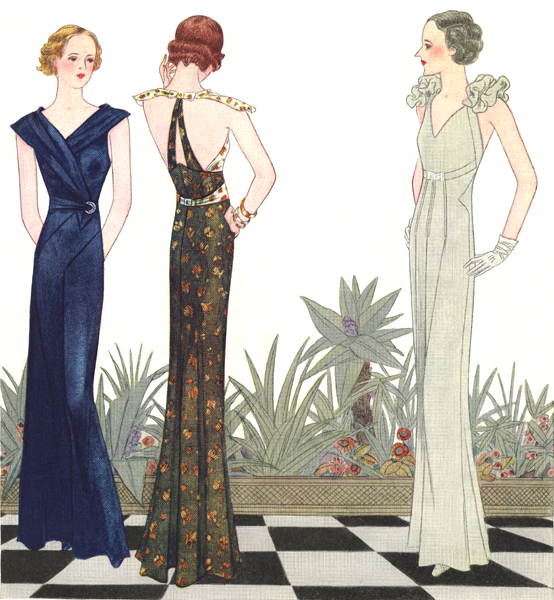
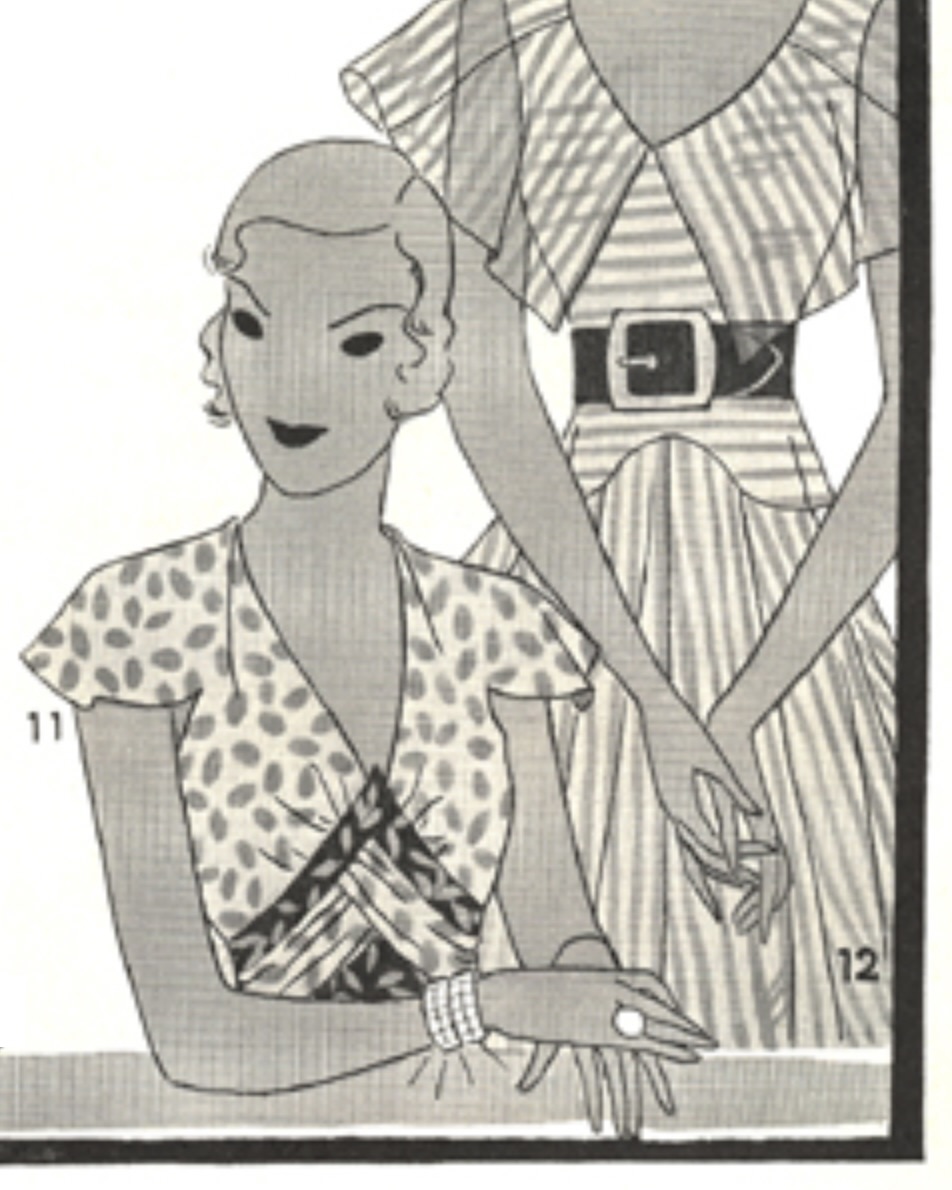
As interwar couture sewing enthusiasts will know, the Mata Kiato evening gown is available as a reproduction from EvaDress. This reproduction is unique among the company’s commercial pattern re-offerings in being re-drafted: when she didn’t win the original at auction, Xandra draped her version based on the images on the envelope front. The EvaDress version has a bias skirt, but includes an option for the original’s straight-of-grain skirt as well.
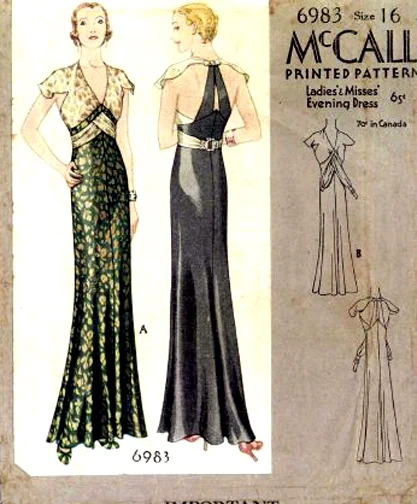
Was Spring 1932 Mata Kiato’s only haute couture collection? Do any Kiato pieces survive in storage, some ninety-four years later? It’s possible that McCall’s patterns and publications preserve the only visual record of this house’s work. With this post, though, the name Mata Kiato gains a presence on the Internet — thanks to collectors of couture sewing patterns.

 PatternVault
Leave a comment