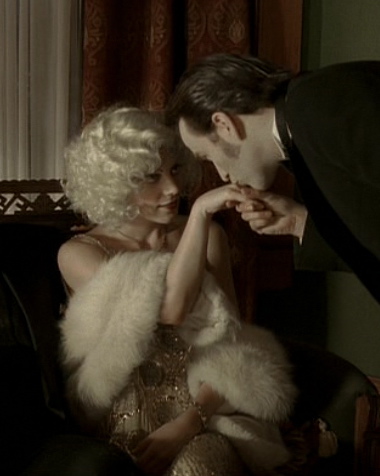
Young woman Kim McKean Bill Compton Stephen Moyer 1920s Chicago 1926 True Blood Season 2
,

Vampire Vamps! McCall 4455 by Martial et Armand

Written by

·

Young woman Kim McKean Bill Compton Stephen Moyer 1920s Chicago 1926 True Blood Season 2
Bill Compton (Stephen Moyer) with a young woman (Kim McKean) in 1920s Chicago in True Blood, season 2.

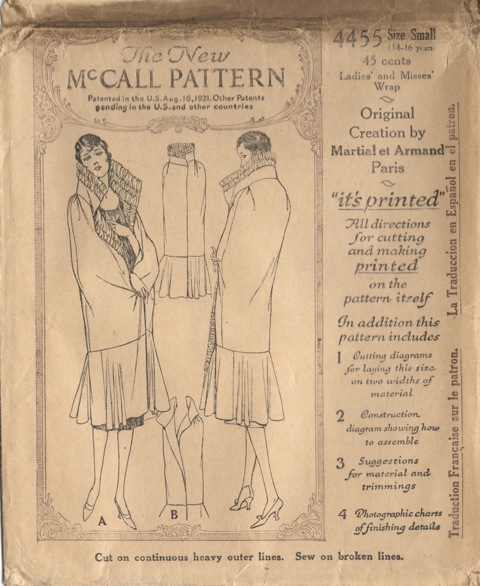
For my vampire flapper Halloween costume, to wear over my 1926 Chanel evening dress I made McCall 4455, an evening wrap by Martial et Armand:
McCall 4455 1920s Martial et Armand evening wrap pattern
McCall 4455 by Martial et Armand (1926) Evening wrap.

The wrap has a dramatic standing collar, a generous flounce, and the option of a shirred facing; pleats shape the shoulders, and the collar is reinforced with canvas. Here’s the colour illustration, from a page of evening designs in the McCall Quarterly:
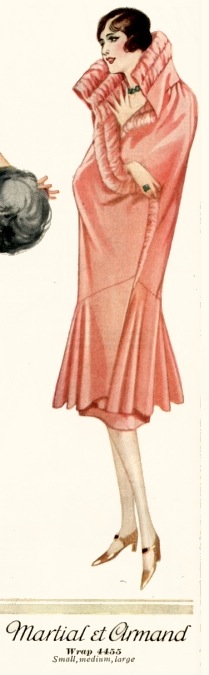
McCall 4455 Martial et Armand wrap pattern Summer 1926 McCall catalog
McCall 4455 by Martial et Armand in the McCall Quarterly, Summer 1926.

Martial et Armand was a Paris house established in the late nineteenth century; for more details see Past Perfect Vintage’s recent post. I found these contemporary Martial et Armand sketches in L’Officiel’s online archives:
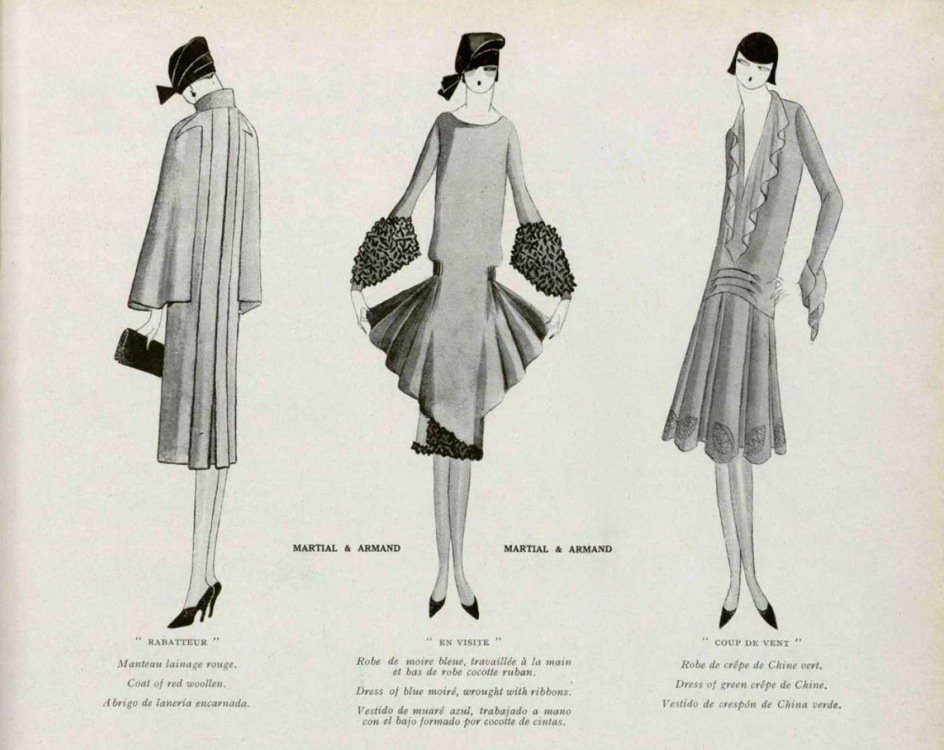
L'Officiel 1920s Martial et Armand dessins originaux original drawings
Martial & Armand sketch in L’Officiel no. 58 (June 1926) Image: jalougallery.com.

I thought the shirring on version A of the wrap would compete with my dress, so I made version B, the plain version. I chose a black velveteen and used some black lining that I already had. The pattern didn’t give ‘with nap’ yardage for 36″ fabric (the width of my velveteen), and I soon found out why: the back flounce piece is too wide to fit this width. I needed to cut the back flounce in two pieces.

To ensure the velveteen didn’t slip, I used a diagonal basting technique I found in Claire Shaeffer’s Couture Sewing Techniques which is known as ‘cross stitching.’ (See her diagrams on Google books here and here.) This technique involves hand-basting over the seamline with diagonal stitches, then basting again in the opposite direction so that you have a series of ‘X’s across the seamline. Here’s a photo of the diagonally basted flounce:
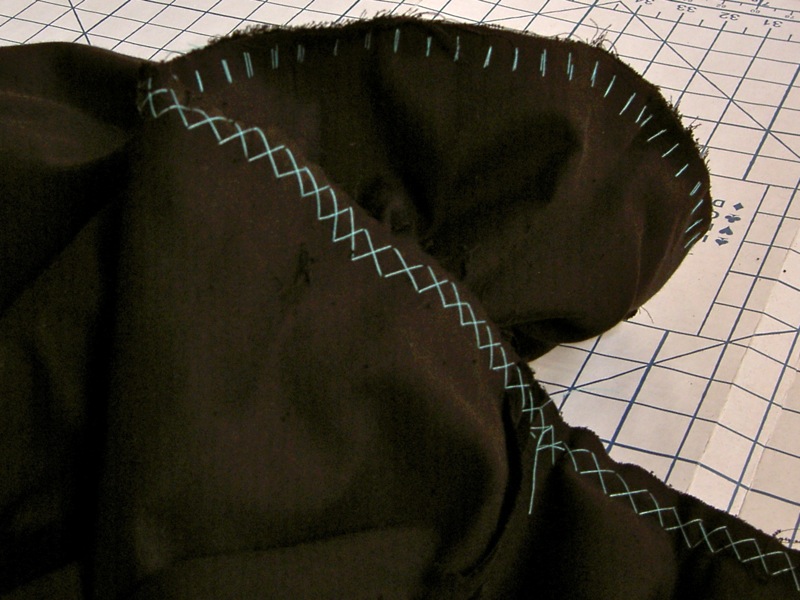
Photo of cross stitching X basting for basting cotton velvet or velveteen

I was surprised to find instructions for making the collar and facing. The Printo Gravure has four-step, illustrated instructions on “how to sew collar and facing with interlining to garment” which call for an interlining of percaline. Percaline? According to Merriam Webster, percaline is French, from percale, from Persian پرگاله pargālah: percaline is glossy, percale isn’t. According to the Oxford Dictionary, percaline entered the English language in the mid-nineteenth century; percale originally referred to a fabric imported from India in the seventeenth and eighteenth centuries, but later came to refer to a light cotton fabric. (I love the history embedded in textile names.) When my inquiry was met with confusion at my local fabric shop, though, I just went with some interfacing I had in my stash. I catch stitched the canvas along the collar seamlines, but didn’t try any pad stitching.

One difficulty I encountered was with the ease at centre back. Dazed from too much diagonal basting, I forgot how to ease with double rows of stitches and used only a single row, so that there were gathers at the back. I didn’t remember until after I’d hand-stitched through the collar seam. I redid the entire area, only to find I had produced… nicer gathers. I did pre-steam the velveteen, so I’m not sure whether it could have been shrunk further. I wish I’d been able to get it right, but there it is.

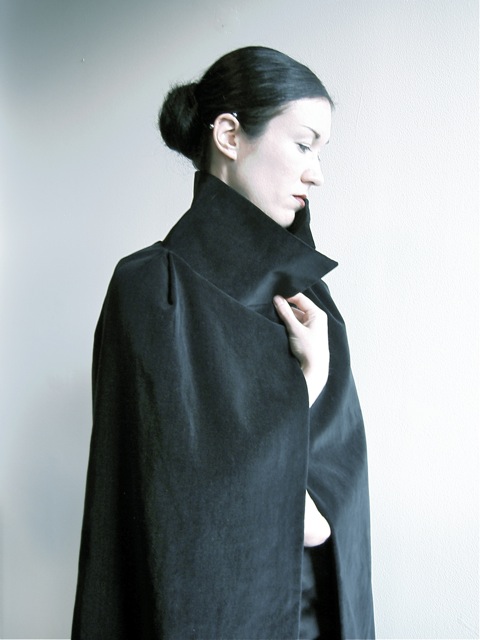
Here are some photos of the finished wrap. Despite having seen the illustration, I wasn’t prepared for the drama of the standing collar:
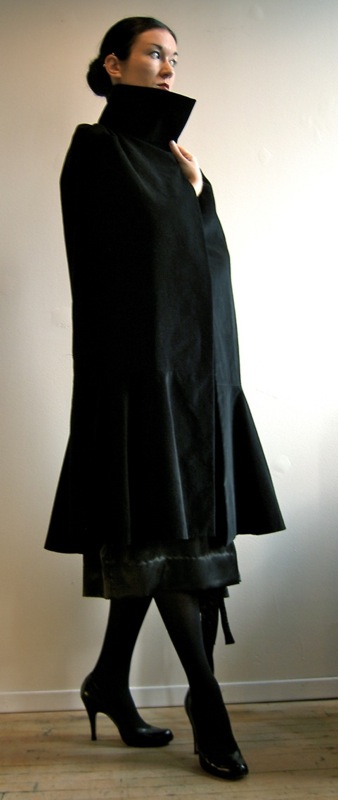
1920s evening wrap pattern Martial et Armand McCall 4455

The shoulder pleats turned out well:

1920s evening wrap pattern by Martial et Armand McCall 4455

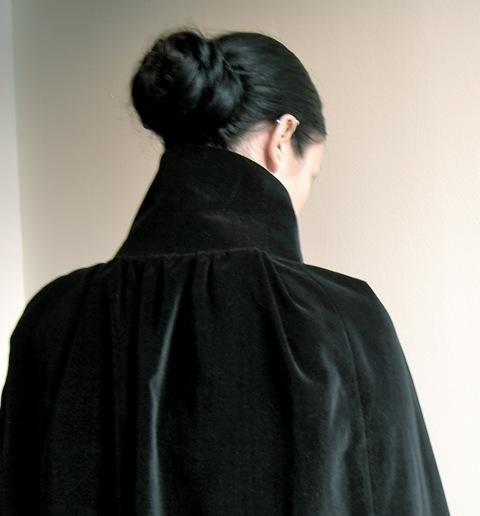
Here are some detail shots of the collar, front and back:
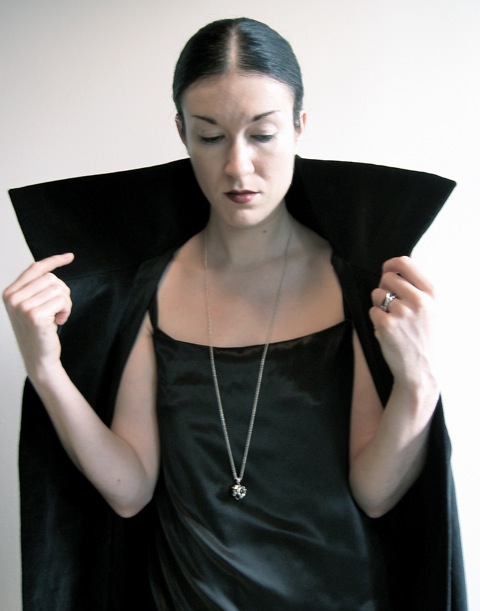
1920s evening wrap pattern by Martial et Armand McCall 4455

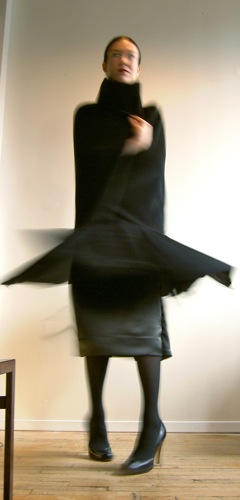
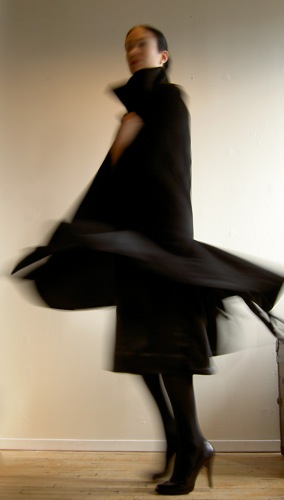
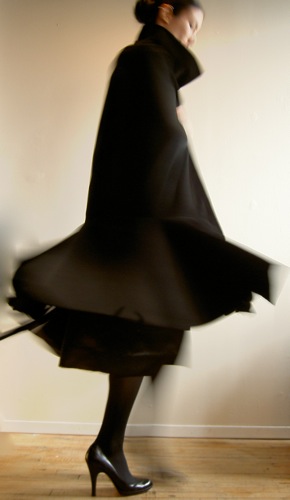
Some action shots showing the fullness of the flounce:
I hope you’ve enjoyed my foray into Twenties designer patterns. The lack of instructions was certainly an adventure, and made me realize just how many techniques I have no clue about! If you’ve sewn with 1920s patterns, I would love to hear about your experience. Twenties sewing book recommendations are also very welcome — I have Laura Baldt’s Dressmaking Made Easy (1928) but it doesn’t address all the issues I encountered. How can you attach skirt drapery just right, or ease a bulky fabric like velvet? Would a five-inch standing collar benefit from pad stitching? And how does one make rosettes for evening?

A big thanks to Naomi for taking such fabulous photos!

(Cross-posted to Sew Retro.)

11 responses to “Vampire Vamps! McCall 4455 by Martial et Armand”

  1. prttynpnk Avatar

    I hope you don’t plan to leave these lovelies in a dark closet all year- they are too wonderful to only wear for Halloween!

  2. Debi Avatar

    Love, love, love this! The collar might benefit from padstitching….does it stay up on it’s own?

    1. PatternVault Avatar

      Thanks, Debi! The collar does stay up by itself—it’s interfaced with industrial-strength canvas. I’ve never tried pad stitching so wasn’t sure what it might add. The engraving does show the collar folding fetchingly..

  3. Amy Avatar

    Oh wow, I love that standing collar. Simply gorgeous. You have such a beautiful collection of 20s patterns and I had no idea these earlier McCall’s existed–I love the style of their illustrations. I have a similar repro pattern–a capelet from Decades of Style–that’s been waiting to be made for like two years. It needs an event!

  4. Amelia Avatar

    Tres Chic! Your wrap looks just divine. Claire Shaeffer’s book is such a valuable resources, I love it. I do much of my sewing “by hand” using the types of techniques she illustrates…because it’s fun and why not? Did you insert Godets at the bottom or is that just how the fabric naturally drapes due to being cut on the bias? Looks great.

    1. PatternVault Avatar

      Thanks, Amelia! I didn’t add any godets to the flounce. It was gigantic as is—it consists of circular pieces plus side panels.

  5. Janice Avatar

    I love your costume! I hope you plan to wear it year round (or at least during the cold season), it’s too beautiful to be kept in the closet.

    Btw I just discovered your blog now, I love it! These 20s patterns are so rare and look wonderful sewn up.

  6. PatternVault Avatar

    Thanks for your lovely comments, ladies! Hopefully I’ll find occasion to wear the wrap out soon—New Year’s, maybe? 😉

  7. Natalia Avatar
    Natalia

    Wow, this is so stunning! I love the black velvet, stand up huge collar, and flounces. Is it awkward to wear without sleeves? I thought it would be amazing to just wear around on any sort of special occasion. But it would be more “flexible” with sleeves. I wish I could draft a similar pattern and add sleeves, maybe with an interesting feature on them too.

    I really love those shoulder pleats too. This pattern needs to be reproduced for general use! I would buy it.

    1. PatternVault Avatar

      Thanks, Natalia, and duly noted! I didn’t find it too awkward to wear, but I hesitate to wear it in the crush of public transit, for instance.

      That’s an interesting point about adding sleeves. I associate the wrap’s impractical, clutched-closed posture with mid-Twenties evening looks.. Perfect for alighting from your chauffeur-driven Bentley. But for the later 1920s I’ve seen more sleeves on evening coverups—plain, bell, or even bell with elbow flounce (!)

  8. Lavinia Avatar

    Great fabulous am composing the Biography of Martial et Armand and found some rare photos of their establishment in Paris. coming soon on headtotoefashionart.com

Leave a reply to Debi Cancel reply

This site uses Akismet to reduce spam. Learn how your comment data is processed.